
Achieving a healthy, radiant complexion often feels like solving a complex puzzle, especially when you are standing in front of a bathroom mirror cluttered with various bottles and jars. Many people find themselves questioning the proper order of operations when it comes to their daily skincare regimen. Specifically, the relationship between toner and serum is a frequent point of confusion, yet mastering this sequence is vital for ensuring your skin absorbs the potent active ingredients effectively.
Understanding the Purpose of Toner in Your Routine
To put it simply, a toner acts as a foundational layer that prepares your face for the subsequent treatments. Historically, these products were used primarily to restore the natural pH balance of the skin after cleansing, which could sometimes be disrupted by harsh soaps. In a modern routine, a high-quality liquid treatment serves a broader purpose: it removes any lingering impurities that your cleanser might have missed while providing an initial surge of hydration.
When you apply this liquid to your skin, you are essentially dampening the surface, which makes it more receptive to the products that follow. Think of your complexion like a sponge; a dry sponge is often rigid and struggles to absorb liquid, whereas a damp sponge pulls moisture into its core almost instantly. By using a light, watery formula, you ensure that your pores are primed and ready for the more concentrated ingredients found in your treatment layers.
The Role of Serums in Targeted Treatment
A serum is a highly concentrated formula designed to deliver specific active ingredients directly into the dermis. Unlike a moisturizer, which is generally formulated to sit on the surface and lock in hydration, these treatments are lightweight and possess smaller molecular structures. Because they are packed with potent compounds like Vitamin C, hyaluronic acid, or retinol, they should always be the stars of the show in your skincare regimen.
When you are applying these treatments, you want to ensure there is no barrier between the product and your cells. This is exactly why the order matters so much.
If you were to put a thick, occlusive cream on first, your targeted treatment would simply sit on top of that barrier, unable to penetrate the surface to do its heavy lifting. By placing them closer to the skin, you maximize the efficacy of your investment in high-quality products.
Step-by-Step Guide to Proper Layering
The golden rule of skincare is to layer your products from the thinnest, most watery consistency to the thickest, most viscous one. This simple logic prevents thicker formulas from blocking the absorption of lighter ones. Following this rule, your toner should almost always come before your serum.
1. Cleansing the Face
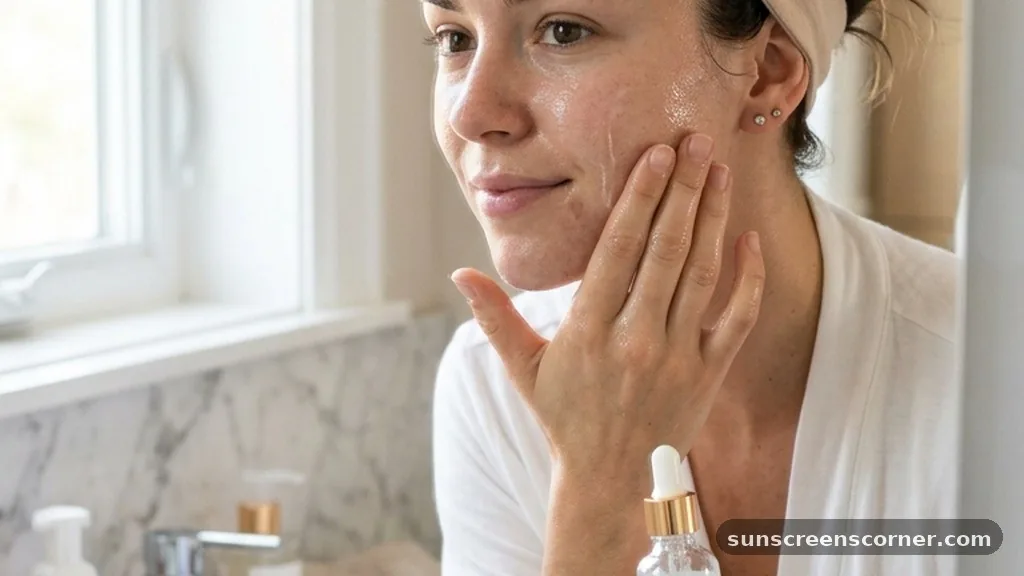
Before you do anything else, start with a clean canvas. Use a gentle cleanser to remove dirt, oil, and makeup. Pat your face dry, but consider leaving it slightly damp if you prefer, as some formulas absorb better on moist skin.
2. Applying Toner
Pour a small amount of your liquid treatment onto a cotton pad or, better yet, directly into your clean palms. Gently press it into your skin. This step is crucial because it balances your complexion and provides that initial layer of hydration that makes everything else work better.
3. Using Your Serum
While your complexion is still slightly damp from the previous product, take 3-4 drops of your chosen treatment. Warm it between your fingers and press it into your cheeks, forehead, and chin. Because the skin is already hydrated, the active ingredients will glide on smoothly and absorb much deeper.
4. Sealing with Moisturizer
After your treatment has had a minute to sink in, it is time to lock everything in. A moisturizer acts as a seal, preventing trans-epidermal water loss. If you are a fan of brands like Biossance, you likely appreciate how their squalane-based formulas provide a final, nourishing barrier that complements the work you did in the previous steps.
Common Mistakes to Avoid When Layering
One of the biggest blunders people make is being too impatient. If you rush through your routine, you risk “pilling,” which is when your products bunch up and roll off your face in little balls. Always allow each layer to become slightly tacky or fully absorbed before moving on to the next step.
Another frequent error is using too much product. Because these formulas are concentrated, a little goes a long way. Flooding your face with too much liquid can actually hinder absorption rather than help it.
Additionally, ensure you are choosing products that address your specific concerns. Mixing too many active ingredients—like using high-strength AHAs with potent retinols—can lead to irritation, even if you are layering them in the “correct” order.
| Product Category | Consistency | Best Time of Use |
|---|---|---|
| Cleanser | Gel/Cream/Oil | Morning & Night |
| Toner | Watery/Liquid | Immediately after cleansing |
| Serum | Lightweight/Silky | After toning, before cream |
| Moisturizer | Cream/Lotion | Final step to seal hydration |
Addressing Topical Gaps: When to Skip or Double Up
You might wonder if you really need both of these products every single day. The truth is, your skincare needs change based on the environment, your age, and your current skin health.
If you are experiencing extreme dryness or a compromised barrier, you might find that a harsh, alcohol-based liquid treatment is doing more harm than good. In this case, it is perfectly acceptable to skip that step entirely or switch to a hydrating, alcohol-free essence.
Conversely, some people benefit from “layering” multiple treatments. If you have specific goals—say, you want to brighten with Vitamin C and hydrate with hyaluronic acid—you can absolutely use two different serums. In this scenario, apply the thinner, more watery one first, followed by the slightly thicker one.
Just remember: the toner always goes first to set the stage. If you are using a product from a brand like Biossance, check their specific recommendations, as some of their squalane-based serums have a unique texture that might need to be placed differently depending on the other ingredients in your regimen.
The Importance of Consistency
It is easy to get caught up in the excitement of buying new products, but the real secret to visible results is consistency. Your cells have a natural turnover cycle, usually taking about 28 days to fully renew. If you are constantly changing your order or skipping steps because you are tired, you will never see the full benefits of your investment.
Think of your daily regimen as a ritual rather than a chore. Taking the time to properly apply your treatments allows you a moment of mindfulness.
When you treat your skin with care and follow a logical, science-backed order, you are not just applying chemicals; you are supporting your body’s largest organ in its natural processes of repair and protection. Whether you are using a basic drugstore find or a luxury serum, the sequence of application remains the primary factor in how well those products perform.
### Does toner always go before serum in every routine?
Yes, toners are thinner, so they must be applied first to prepare the skin for thicker serums.
### Can I use a serum without a toner?
Absolutely, you can skip toner if your cleanser is gentle and doesn’t disrupt your skin’s natural balance.
### How long should I wait after applying toner?
Wait about 30 to 60 seconds until your skin feels slightly tacky before applying your next product.
### Is Biossance serum safe for all skin types?
Most Biossance serums are formulated with squalane, which is generally well-tolerated by almost all skin types.
### Should I apply moisturizer before my serum?
No, always apply your moisturizer after your serum to ensure the active ingredients can penetrate your skin.
### Can I mix my toner and serum together?
It is better to apply them separately to ensure each product absorbs correctly and provides its full benefits.
### What happens if I apply products in the wrong order?
The products may not absorb properly, leading to pilling or reduced effectiveness of your active ingredients.