
Getting your skincare routine order right is honestly more important than the fancy ingredients you might be paying big bucks for. If you aren’t layering products in the correct sequence, you’re basically just wasting your money because the active stuff can’t actually get through to your skin.
The general rule of thumb is to go from the thinnest consistency to the thickest, which allows everything to absorb properly without just sitting on the surface and pilling up. It’s a simple concept, but when you’re staring at five different bottles, it gets confusing real fast.
Understanding the Importance of Product Order
The primary reason you need to follow a specific step-by-step process is because of how your pores and lipid barrier function. If you put a heavy cream on first, it creates a physical seal that blocks anything else from penetrating.
Think of it like trying to paint a wall that’s already been covered in wax; nothing is going to stick. When you apply items in the right order, you ensure that your serum—which is usually packed with expensive, potent actives—actually reaches the cells that need it.
The Golden Rule: Consistency Matters
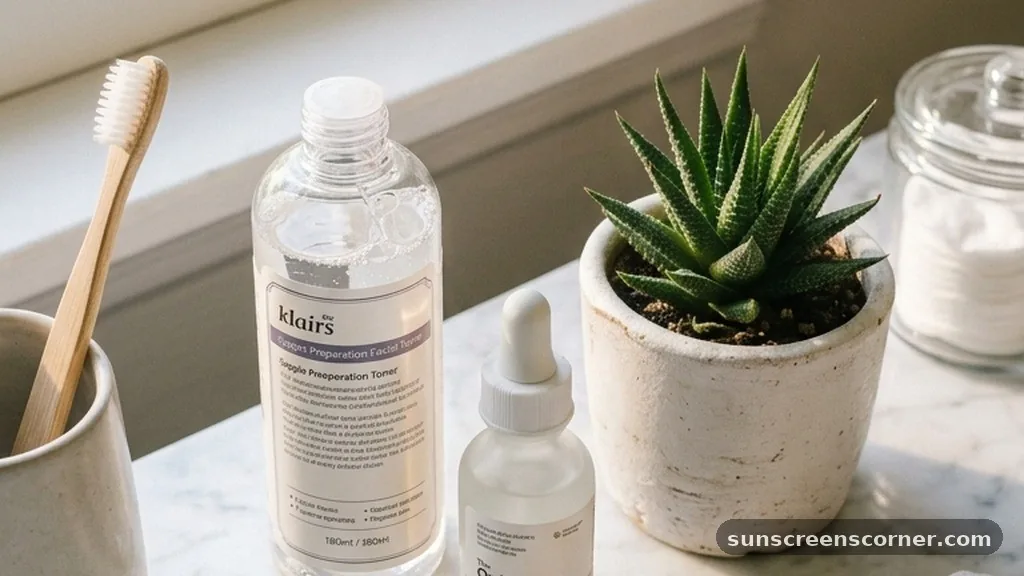
Most dermatologists agree that the best way to remember the sequence is to think about weight. You want to start with the most lightweight, water-based formulas and finish with the heaviest, oil-based ones.
A toner is almost always the first liquid you put on after cleansing because it’s meant to prep the surface. If you try to put a thick oil on before your water-based treatments, you’re essentially creating a barrier that prevents the hydration from sinking in.
The Morning Routine Workflow
In the morning, your main goal is protection. You’re prepping your face to face the environmental stressors like UV rays and pollution. The sequence usually looks like this: cleanser, toner, antioxidant serum, moisturizer, and finally, sunscreen.
Why Antioxidants Go Early
Many people wonder why they should use a Vitamin C or other antioxidant treatment early in the day. These ingredients are designed to neutralize free radicals caused by sunlight and smog.
By putting them on directly after your toner and before your moisturizer, you’re giving them direct access to your complexion. Don’t rush this part—give it about a minute to dry down so it doesn’t get diluted by the next layer.
The Nighttime Routine Workflow
Your evening routine is where the heavy lifting happens. Since you aren’t worried about sun exposure or makeup, you can focus on repair and exfoliation. This is usually when you’d introduce retinoids or stronger chemical exfoliants.
Layering Actives at Night
If you’re using a retinoid, it’s usually best to apply it after your cleanser and a light toner, but before your heavy night cream. If you use it too late in the process, the thick cream might prevent the retinoid from doing its job, or it might make the retinoid feel less irritating (which some people actually prefer, but it does lower the potency). Always check the specific instructions on your products because some brands have proprietary delivery systems that might change the rules.
Common Mistakes When Layering
One of the biggest mistakes people make is waiting too long between steps. While you want the serum to absorb, you don’t need to wait twenty minutes. Usually, a minute or two is plenty.
Another issue is using too many active ingredients at once, which can lead to a compromised barrier. If your face starts stinging or turning bright red, you’ve probably overdone it.
The Problem with Too Many Products
Sometimes less is more. You don’t need a ten-step process to have healthy skin. If you’re layering a Vitamin C, a niacinamide, a retinol, and three different oils, you might be causing more harm than good.
Focus on a solid cleanser, a reliable moisturizer, and a high-quality SPF. Everything else is just an optional add-on that you should introduce slowly.
Topical Gaps: Addressing Specific Concerns
There’s a lot of confusion regarding where eye cream fits into the mix. Generally, eye cream should be applied before your moisturizer but after your lighter serums. Because the skin around the eyes is so thin, you want to make sure the targeted ingredients get in there before you seal everything off with a heavy face cream.
When to Use Facial Oils
Facial oils are almost always the final step in your evening routine. They are occlusive, meaning they trap moisture in.
If you put an oil on before your water-based moisturizer, the moisturizer will never get through. Treat the oil like a “sealant” for the rest of your work.
Table: Recommended Layering Sequence
| Sequence | Product Category | Purpose |
|---|---|---|
| 1 | Cleanser | Removes debris and preps the surface |
| 2 | Toner | Balances pH levels |
| 3 | Serum | Delivers concentrated active ingredients |
| 4 | Eye Cream | Targets delicate skin around the eyes |
| 5 | Moisturizer | Hydrates and seals in previous layers |
| 6 | Oil / SPF | Protects or provides final occlusive barrier |
FAQ Section
Can I use toner after my serum?
No, you should always apply toner first to prep the surface before using a concentrated serum.
Does the order of skincare products really matter?
Yes, applying products in the wrong order prevents active ingredients from penetrating the skin effectively and properly.
Should I wait between applying different skincare products?
Waiting about sixty seconds between each product allows the formula to absorb without pilling or losing potency.
Is it okay to skip the moisturizer step?
Unless you have extremely oily skin, moisturizer is essential for locking in hydration and protecting your barrier.
Can I mix my serum into my moisturizer?
It is generally better to layer them separately to ensure each product functions as intended by the manufacturer.
When should I apply facial oil in my routine?
Always apply facial oil as the very last step in your routine to seal in all previous layers.
How many products are too many in a routine?
Using more than five or six products often leads to irritation and diminished returns for your skin health.