
Getting the order of your daily regimen right is just as important as the quality of the items you choose. Many people invest in high-end skincare products but fail to see results simply because they apply them in the wrong sequence.
To get the most out of your serum or moisturizer, you need to follow a logic based on molecular weight and absorption rates. If you put a heavy layer on first, those lightweight active ingredients won’t be able to penetrate your skin effectively.
The Fundamental Rule of Skincare Layering
The golden rule for your skincare routine is to always move from the thinnest consistency to the thickest. Think of it like building a house; you need the foundation to be solid and clear before you add the heavy roof. When you apply your treatments in this order, you ensure that the water-based formulas can sink into the pores without being blocked by heavier occlusive barriers.
Most dermatologists suggest that you start with a clean face. Once your surface is free of debris and excess oil, your pores are primed to soak up the nutrients.
If you use a thicker cream too early, it creates a film that acts as a shield, preventing your targeted treatment from doing its job. It’s a common mistake, but an easy one to fix once you grasp the texture hierarchy.
Why Order Matters for Product Efficacy
When you layer your skincare items, you are essentially creating a delivery system. Water-based formulas are designed to carry active compounds deep into the epidermis.
If you layer an oil-based product over these, the oil acts as a sealant, locking in the hydration and the active ingredients. If you reverse this, you are essentially wasting your money, as the active components will just sit on the surface of your skin and eventually rub off on your pillow or clothes.
The Role of Molecular Weight

Everything you use on your face has a specific molecular weight. Ingredients like hyaluronic acid have smaller molecules, allowing them to penetrate deeper.
Conversely, waxes and heavy butters have large molecules that sit on the surface to prevent transepidermal water loss. By following the “thin-to-thick” rule, you respect the physics of your products, which leads to better absorption and fewer breakouts caused by clogged pores.
Step-by-Step Sequence for Morning and Evening
While your morning and night routines might differ slightly, the core philosophy remains the same. In the morning, your focus should be on protection and prevention. At night, you want to focus on repair and heavy-duty hydration.
| Time of Day | Primary Goal | Focus Ingredients |
|---|---|---|
| Morning | Protection | Antioxidants, SPF, Light Hydration |
| Evening | Repair | Retinoids, Peptides, Rich Creams |
The Morning Routine
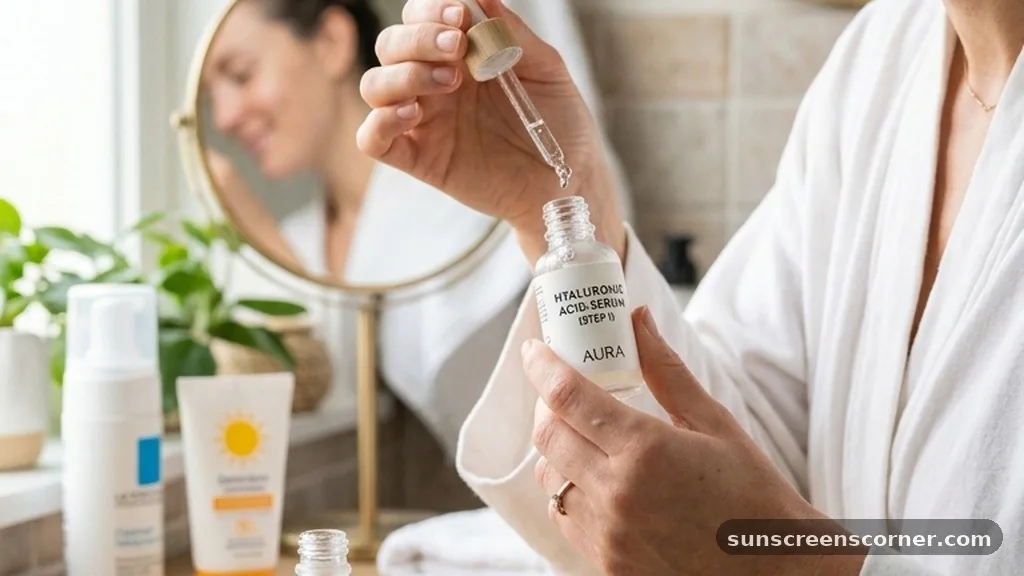
1. Cleansing: Start by washing your face to remove sweat and oils from the night. 2. Toner/Essence: These help balance pH levels and prepare the surface for the next step. 3. Antioxidant Serum: Use a vitamin C or similar formula to protect against environmental stressors. 4. Moisturizer: A lightweight moisturizer provides a base level of hydration. 5. Sunscreen: This is non-negotiable; always apply this last to ensure maximum UV protection.
The Evening Routine
1. Double Cleanse: Remove SPF and pollutants with an oil cleanser followed by a water-based wash. 2. Treatment: This is when you use your strongest actives, like retinol or AHAs. 3. Serums: Apply your hydrating or brightening treatments here. 4. Moisturizer: Use a thicker cream to lock in everything you’ve applied before.
Common Mistakes to Avoid
Even when people know the order, they often make errors that sabotage their progress. One common issue is not waiting long enough between applications.
You should give your skin about 60 seconds to absorb each layer. If you rush, you end up pilling, where the products clump together and roll off your face.
Another issue is over-layering. Sometimes, less is more.
If you have a ten-step process, you might actually be causing irritation. If you find your face looking red or feeling sensitive, try scaling back to just a cleanser, a single serum, and a good moisturizer.
Addressing Topical Gaps: The Truth About Product Compatibility
A frequent question is whether specific ingredients can be mixed. For example, many wonder if they can use retinol and vitamin C at the same time. While it’s technically possible, it can cause significant irritation for many people.
It’s often better to alternate these powerful ingredients. You should also be careful about mixing exfoliating acids with retinoids, as this can destroy your moisture barrier. Always look at the back of your products to see if there are specific warnings about layering.
Frequently Asked Questions
Does the order of my skincare routine really change how well it works?
Yes, applying products from thinnest to thickest ensures that active ingredients penetrate the skin effectively without obstruction.
Should I apply my serum before or after my moisturizer?
Always apply your serum before your moisturizer, as serums are lighter and need to penetrate the skin first.
Is it okay to skip moisturizer if I have oily skin?
No, even oily skin needs hydration; use a lightweight, oil-free moisturizer to keep your barrier healthy and balanced.
How long should I wait between applying different skincare products?
Wait about 60 seconds between each step to allow the product to absorb properly and prevent unwanted pilling.
Can I use multiple serums in one routine?
Yes, you can layer multiple serums, but apply them from the thinnest consistency to the thickest for absorption.
Why does my skincare pill when I apply it?
Pilling often happens when you use too many products or don’t wait long enough for them to dry.
What is the most important step in a basic skincare routine?
Cleansing, moisturizing, and using sunscreen are the three essential pillars for maintaining healthy and protected skin daily.