Babies actually absorb more chemicals through their skin than adults do. This biological reality makes choosing gentle sun protection much more complicated than simply grabbing whatever bottle sits on the front shelf at the pharmacy.
Parents need formulas that physically block ultraviolet rays without triggering rashes or stinging tender eyes.
Finding the best natural sunscreens for babies takes some thoughtful comparison, so let us walk through three top choices right now.
Key Takeaways
- Look for mineral active ingredients like zinc oxide and titanium dioxide because they sit on top of the skin rather than absorbing into the bloodstream.
- Check the water resistance rating to ensure the protection stays put during splash time, as most options offer around 80 minutes of defense.
- Prioritize fragrance-free formulas to minimize the risk of contact dermatitis and allergic reactions on sensitive infant skin.
- Choose broad spectrum coverage to guarantee protection against both UVA and UVB rays during outdoor play.
- Consider the dispensing format, such as roll-ons or squeeze tubes, to make chaotic application squirm-proof and fast.
| Sensitive Skin Essential |  |
Aveeno Baby Continuous Protection SPF 50 | Pure zinc oxide protection | Soothing natural oat extract | Tear-free mineral formula | View On Amazon | Read Review |
| Mess Free Applicator |  |
Sun Bum Baby Bum Mineral SPF 50 Roll-On | Convenient roll-on stick | Reef friendly mineral formula | Infused with nourishing oils | View On Amazon | Read Review |
| Smart UV Detection | 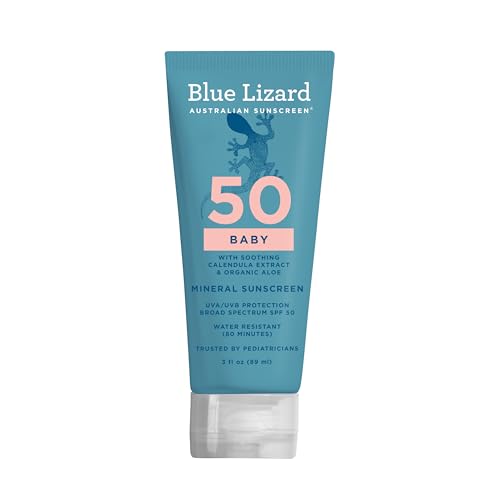 |
Blue Lizard Baby Mineral Sunscreen SPF 50+ | UV reactive smart cap | Maximum SPF 50+ rating | Fragrance free mineral protection | View On Amazon | Read Review |
More Details on Our Top Picks
-
Aveeno Baby Continuous Protection SPF 50
Parents dealing with easily irritated infant skin often find relief here, especially since the formula relies purely on mineral barriers. You get broad spectrum SPF 50 coverage that blocks both UVA and UVB rays without resorting to chemical absorbers. The inclusion of soothing oat extract helps calm redness while protecting delicate areas from harsh UV exposure.
Water and sweat resistance hold up reasonably well during splashing sessions, but reapplying frequently remains necessary for actual safety. One slight annoyance is the thick white paste typical of high zinc formulas, which requires some serious elbow grease to blend completely into chubby little legs.
- Brand:Aveeno Baby
- Sun Protection:SPF 50
- Active Ingredient:Zinc Oxide
- Volume:3 Fl Oz
- Special Feature:Fragrance-free and hypoallergenic
- Water Resistance:80 minutes
- Additional Feature:Hypoallergenic mineral sunblock
- Additional Feature:Sweat and water resistant
- Additional Feature:No added parabens or phthalates
-
Sun Bum Baby Bum Mineral SPF 50 Roll-On
Wriggling babies make sunscreen application feel like wrestling an alligator, so a format that minimizes friction is a huge win. The roll-on design lets you glide the lotion directly onto squirming limbs without getting sticky product all over your own palms. It is entirely vegan and reef friendly, meeting strict environmental standards while guarding tender skin.
Moisturizing coconut oil and shea butter keep dryness at bay, though this means the finish can feel a bit greasy on humid afternoons. You still need to rub the product in slightly after rolling it on, but the speed of coverage cuts down application time significantly.
- Brand:Sun Bum
- Sun Protection:SPF 50
- Active Ingredient:Zinc Oxide
- Volume:3 oz
- Special Feature:Roll-on applicator
- Water Resistance:80 minutes
- Additional Feature:Vegan and cruelty free
- Additional Feature:Hypoallergenic and dermatologist tested
- Additional Feature:Hawaii 104 Act compliant
-
Blue Lizard Baby Mineral Sunscreen SPF 50+
Sun safety requires vigilance, and this lotion helps you track exposure using a smart cap technology that changes color in ultraviolet light. The bottle literally turns blue outdoors when harmful rays are present, serving as an instant reminder to slather on another layer. Mineral active ingredients sit safely on top of the skin rather than absorbing into the bloodstream.
Parabens and fragrances are entirely absent, making this a reliable pick for preventing allergic reactions on raw patches. The heavy mineral base creates a noticeable white barrier, which actually helps you spot missed patches before heading out into the glare.
- Brand:Blue Lizard
- Sun Protection:SPF 50+
- Active Ingredient:Zinc Oxide and Titanium Dioxide
- Volume:3 Ounce
- Special Feature:Smart cap turns blue in UV light
- Water Resistance:80 minutes
- Additional Feature:Dermatologist recommended mineral formula
- Additional Feature:Broad spectrum UVA and UVB defense
- Additional Feature:Free of parabens and artificial fragrances
Frequently Asked Questions
When can I start putting sunscreen on my baby?
Pediatricians generally advise keeping babies under six months completely out of direct sunlight and using shade or clothing instead. Their skin is extremely thin and absorbs topical products much faster than adult skin does. Once your child crosses that six month threshold, you can freely apply a mineral sunscreen to exposed areas like the face and hands. Until then, rely on wide brims, lightweight blankets, and good old fashioned shade.
Why does mineral sunscreen leave a white cast on my baby?
Zinc oxide and titanium dioxide are natural physical powders that do not dissolve into liquids. They sit on the skin like microscopic white paint chips, which creates that ghostly appearance. Manufacturers often use micronized minerals to reduce this effect, but a slight white layer is actually helpful. It acts as a visual guide so you can easily spot missed spots on wiggly limbs.
How do I wash mineral sunscreen off at the end of the day?
Mineral formulas cling stubbornly to skin by design so they do not wash off in the pool. You will need a gentle baby wash and a soft washcloth to properly break down the barrier during bath time. Plain water and a quick rinse usually leave behind a filmy residue that can clog pores. Take your time massaging a mild cleanser over every creamer fold and crease.
Does baby sunscreen expire, and can I use last year's bottle?
Sunscreen ingredients degrade over time, especially when left in hot beach bags or direct sunlight. Check the expiration date stamped on the crimp of the tube before you slather it on your child. If the bottle is past its prime or the texture looks separated and watery, toss it immediately. Using expired lotion means your baby has zero protection against burning rays.
Can I use my own adult sunscreen on my baby in a pinch?
Adult formulas frequently contain chemical filters, synthetic fragrances, and anti aging additives that will irritate infant skin. You should only use products formulated specifically for sensitive skin with mineral active ingredients. Adult sport formulas are also much harder to wash off and can cause painful rashes. Pack a separate baby specific tube in your diaper bag just to be safe.