
Shaping hot steel used to mean endless hours with a heavy hand file and a lot of patience.
Today, picking the best belt grinders for knife making makes the whole process faster and much more precise.
Let us look at what machinery actually works for custom blades.
Key Takeaways
- Prioritize a variable speed control using a VFD so you can slow things down for fine finish work without burning the steel.
- Look for a motor with at least one horsepower if you plan on removing stock quickly from thick bar stock.
- Consider the belt size carefully, knowing that standard seventy-two-inch belts offer the widest variety of abrasive options for serious knifemakers.
- Check the build rigidity because vibration causes uneven bevels and ruins hours of careful grinding work.
- Decide whether a combination unit with a bench grinder wheel suits your shop space better than a dedicated belt machine.
| Ultimate Workshop Combo | 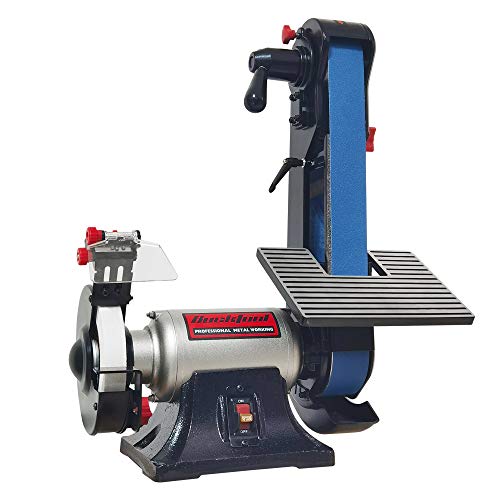 |
Bucktool 2×42 Belt Sander and Grinder | Dual tool functionality | Includes bench grinder wheel | Compact workshop footprint | View On Amazon | Read Review |
| Professional Blade Maker |  |
Vevor 72×2 Variable Speed Belt Grinder | Variable speed control | Heavy-duty motor power | Includes grinding moulds | View On Amazon | Read Review |
| Compact Detail Specialist |  |
Vevor 30×1 Variable Speed Belt Grinder | Great for small handles | Variable speed adjustment | Small workspace footprint | View On Amazon | Read Review |
| Heavy Duty Sharpener |  |
Vevor 72×2 Knife Sharpener Grinder | Fits standard 72-inch belts | High-power 1500W motor | Solid metal frame | View On Amazon | Read Review |
| Angle Master Jig |  |
Vevor Adjustable Belt Sander Knife Jig | Precise angle adjustments | Dual handle grip | Long sharpener locator | View On Amazon | Read Review |
| Aggressive Stock Remover |  |
Ceramic Sanding Belts 2×72 Inch | Ceramic grain construction | Multiple grit options | High durability | View On Amazon | Read Review |
| Midsize Powerhouse |  |
Bucktool 2×48 Belt Sander for Knives | 1-horsepower motor | Fast 4500 FPM speed | Extended 48-inch belt | View On Amazon | Read Review |
| Workshop All Rounder |  |
Vevor 2-in-1 Belt and Disc Sander | Includes 6-inch sanding disc | 90-degree belt holder | Integrated LED work lamp | View On Amazon | Read Review |
More Details on Our Top Picks
-
Bucktool 2×42 Belt Sander and Grinder
Are you hoping to maximize your shop space without sacrificing versatility? This machine serves as a dual-purpose powerhouse for general metalworking and shaping.
The 3.5A motor provides steady rotation for your daily grinding and sharpening needs. But you should note that the belt size limits you to shorter stock compared to professional 72-inch setups.
- Brand:Bucktool
- Type:Belt sander and bench grinder combo
- Belt Size:2 x 42 inches
- Motor Power:3.5 Amps
- Included Accessories:Grinding wheel and sanding belt
- Additional Feature:Combines belt sanding and grinding
- Additional Feature:Integrated work rests
- Additional Feature:Compact dual setup
-
Vevor 72×2 Variable Speed Belt Grinder
Professional knife makers often demand precise speed control for delicate bevels and heat management. This heavy-duty model brings variable speed functionality via an external VFD to your garage or studio.
The 1500W 2HP motor chews through hardened steel with ease. Yet the hefty weight means you need a dedicated, sturdy workbench to mount this unit permanently.
- Brand:Vevor
- Type:Belt grinder sander
- Belt Size:72 x 2 inches
- Motor Power:1500W 2HP
- Speed Control:Variable speed with VFD
- Included Accessories:3 grinding moulds and 3 sanding belts
- Additional Feature:Variable speed VFD included
- Additional Feature:Three distinct grinding moulds
- Additional Feature:Heavy steel construction
-
Vevor 30×1 Variable Speed Belt Grinder
Smaller blades and intricate handle work require a delicate touch and a narrower belt. This compact machine delivers precise control for detail-oriented tasks without taking over your entire workbench.
The 550W motor handles smaller stock removal efficiently. But the restricted belt dimensions mean you cannot tackle large kitchen knives or machetes easily.
- Brand:Vevor
- Type:Belt grinder sander
- Belt Size:30 x 1 inch
- Motor Power:550W
- Speed Control:Variable speed with VFD
- Included Accessories:2 grinding moulds and 3 sanding belts
- Additional Feature:Compact 1-inch wide belt
- Additional Feature:Adjustable working angles
- Additional Feature:Includes specialized grinding moulds
-
Vevor 72×2 Knife Sharpener Grinder
Do you want a machine that handles both blank profiling and final edge maintenance? This versatile platform supports industry-standard belt lengths while delivering serious muscle for your workshop.
The 1500W output prevents the belt from stalling under heavy pressure. On the downside, the initial assembly process requires patience and mechanical know-how.
- Brand:Vevor
- Type:Belt grinder knife sharpener
- Belt Size:72 to 82 x 2 inches
- Motor Power:1500W
- Speed Control:Variable speed with VFD
- Included Accessories:3 grinding moulds and 3 sanding belts
- Additional Feature:Compatible with multiple belt lengths
- Additional Feature:Includes VFD speed controller
- Additional Feature:Sturdy base mounting design
-
Vevor Adjustable Belt Sander Knife Jig
Consistency ruins many custom knives when you try to grind bevels entirely by hand. This adjustable sharpening jig provides repeatable bevel angles from 85 to 115 degrees for cleaner grinds.
The dual handles offer superior control during long sessions at the grinder. However, you must ensure your specific sander work rest aligns correctly with the locator bar.
- Brand:Vevor
- Type:Belt sander knife jig
- Included Accessories:Dual handles and locator bar
- Additional Feature:85 to 115 degree adjustment
- Additional Feature:Dual control handles
- Additional Feature:Universal sander compatibility
-
Ceramic Sanding Belts 2×72 Inch
Your machine is only as good as the abrasive tearing away the steel. These ceramic belts deliver rapid material removal and run cooler than traditional aluminum oxide options.
The mixed grit assortment takes you from rough profiling to fine pre-polishing. But ceramic abrasives wear out quickly if you push them against soft wood instead of metal.
- Brand:Generic / Unbranded
- Type:Ceramic sanding belts
- Belt Size:2 x 72 inches
- Additional Feature:40, 60, 80, and 120 grits
- Additional Feature:Designed for metalworking
- Additional Feature:High-performance abrasive bond
-
Bucktool 2×48 Belt Sander for Knives
Sometimes standard 42-inch belts feel too short, yet 72-inch machines require too much room and money. This 1-horsepower motor bridges that gap with a useful 48-inch belt length.
The 4500 FPM belt speed ensures fast metal removal on high-carbon steel blanks. Yet the non-variable speed motor means you cannot slow things down for delicate finishing work.
- Brand:Bucktool
- Type:Belt sander for knife making
- Belt Size:2 x 48 inches
- Motor Power:1 HP, 7 Amps
- Included Accessories:Sanding belt
- Additional Feature:High speed 4500 FPM
- Additional Feature:Designed for knife making
- Additional Feature:Powerful 7-amp draw
-
Vevor 2-in-1 Belt and Disc Sander
Every maker needs a reliable flat platen and a sanding disc for squaring up wooden handle scales. This dual-function sander brings a 2-inch belt and a 6-inch disc together on one stable base.
The 3450 RPM motor provides plenty of velocity for shaping handles and guards. But the belt platen design is primarily built for general utility rather than hollow-grinding knife blades.
- Brand:Vevor
- Type:Belt and disc bench sander
- Belt Size:2 inches wide
- Motor Power:3450 RPM rating
- Included Accessories:Belt, disc, and LED lamp
- Additional Feature:2-in-1 belt and disc combo
- Additional Feature:Built-in LED work light
- Additional Feature:Sturdy vibration-reducing base
Frequently Asked Questions
Do I really need a 2×72 belt grinder or can I start with a smaller size?
You can definitely start with a smaller 1×30 or 2×42 machine if your budget is tight. Just keep in mind that smaller belts heat up faster and wear out quickly because the abrasive path is so short. The 2×72 size is the undisputed favorite for a reason. Belt selection is massive, and the machine has the mass to handle serious steel removal.
What electrical requirements should I check before buying a grinder?
Many high-end grinders use 220V motors that require a dedicated outlet in your garage or shop. If your workspace only has standard household current, look for a motor wired for 115V power. Variable frequency drives often plug into a standard wall outlet while converting the power to run a three-phase motor smoothly. Always double-check the plug type and amperage draw before ordering.
Can I use the same belt for shaping steel and sanding wood handles?
You can, but it is generally a bad idea for the quality of your finished knife. Steel particles embedded in a used belt will stain light-colored wood handles instantly. Keep separate sets of belts for metal removal and handle shaping. Ceramic belts work wonders on steel, while open-coat aluminum oxide or silicon carbide belts handle wood and synthetic scales much better.
How do I keep the belt from tracking off the side of the wheels? IMAGE OR TEXT: Belt tracking usually drifts because of uneven tension or improper alignment of the tracking wheel. Adjust the tracking knob slowly while the machine idles at low speed until the belt rides dead center. Make sure your tooling arm is locked down tight in the receiver. Any wiggle in the arm will throw off your tracking instantly.
Is it better to build my own grinder or buy a pre-built frame?
Building your own machine from a kit saves money if you already own a welder and a metal cutting saw. You can piece together a motor, drive, and wheels over time. Buying a pre-built chassis guarantees square angles and proper alignment right out of the box. Unless you enjoy fabrication projects for their own sake, a manufactured frame lets you focus entirely on making knives.