The single most important rule for baby sun protection is ignoring chemical filters entirely. Mineral active ingredients like zinc oxide sit on top of the skin instead of soaking into the bloodstream, which is exactly why parents hunt for the best natural baby sunscreens before beach season hits.
And you want something that protects delicate skin without causing a fiery red rash. Let us break down the top formulas so you can make an informed choice.
Key Takeaways
- Prioritize non-nano zinc oxide as the primary active ingredient to create a physical barrier against harmful ultraviolet rays.
- Check the label for broad spectrum protection to guard against both UVA and UVB rays effectively.
- Select fragrance free formulas to minimize the risk of allergic reactions and skin irritation on sensitive baby skin.
- Verify water resistance ratings if outdoor water play is on the agenda for the afternoon.
- Choose mineral sunscreens that avoid chemical filters like oxybenzone and octinoxate for safer application.
| Sensitive Skin Essential |  |
Aveeno Baby Continuous Protection Zinc Oxide SPF 50 | 100% zinc oxide formula | Tear-free and gentle | Broad spectrum coverage | View On Amazon | Read Review |
| Easiest Application |  |
Sun Bum Baby Bum Mineral SPF 50 Roll-On | Convenient roll-on format | Vegan and cruelty-free | Hawaii 104 act compliant | View On Amazon | Read Review |
| Smart UV Protection | 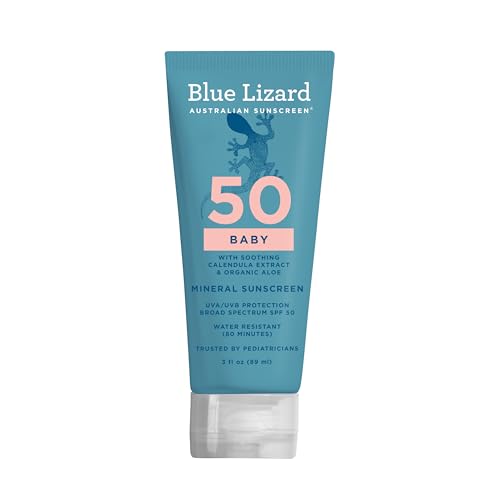 |
Blue Lizard Baby Mineral Sunscreen SPF 50+ | Smart cap technology | Fragrance-free mineral formula | High SPF 50+ rating | View On Amazon | Read Review |
More Details on Our Top Picks
-
Aveeno Baby Continuous Protection Zinc Oxide SPF 50
Protecting delicate skin requires a gentle touch, and this formula is specifically designed for babies who react to harsh chemical filters. You get broad spectrum sun protection using 100% zinc oxide as the active mineral ingredient.
The tear-free lotion stays put during splash time because it is sweat and water-resistant. But you should know that thick mineral creams can require a bit of extra elbow grease during application to avoid leaving a white cast on active babies.
- Brand:Aveeno
- Type:Lotion
- Active Ingredient:Zinc Oxide
- Sun Protection Factor:SPF 50
- Size:3 Fl Oz
- Water Resistance:Yes
- Additional Feature:No added parabens
- Additional Feature:Hypoallergenic for sensitive skin
- Additional Feature:Sweat and water-resistant
-
Sun Bum Baby Bum Mineral SPF 50 Roll-On
Wrangling a wiggly toddler while applying sunscreen feels like a contact sport, which is why a mess-free roll-on design changes the whole routine. This vegan formula relies on mineral blockers to shield your child from harmful rays without relying on irritating chemical additives.
You can toss the travel size tube into any diaper bag for quick touch-ups at the park or beach. One drawback is that the solid stick format makes it slightly harder to gauge exactly how much product remains inside for upcoming trips.
- Brand:Sun Bum
- Type:Roll-On Stick
- Sun Protection Factor:SPF 50
- Size:3 oz
- Additional Feature:Moisturizing UVA and UVB defense
- Additional Feature:Free of octinoxate and oxybenzone
- Additional Feature:Compact travel size
-
Blue Lizard Baby Mineral Sunscreen SPF 50+
Sun safety education starts early, and this clever bottle actually changes color in harmful ultraviolet light to remind you when protection is needed. You receive maximum SPF 50+ defense that is entirely fragrance-free to keep developing skin safe and happy.
The water-resistant lotion provides reliable armor for long afternoons spent outdoors by the pool. On the downside, the heavy-duty formula can feel slightly heavy on the skin until it fully absorbs.
- Brand:Blue Lizard
- Type:Mineral Lotion
- Active Ingredient:Zinc Oxide
- Sun Protection Factor:SPF 50+
- Size:3 Ounce Tube
- Water Resistance:Yes
- Additional Feature:Cap changes color in UV light
- Additional Feature:UVA and UVB protection
- Additional Feature:Designed for baby skin
Frequently Asked Questions
When can I start putting sunscreen on my baby?
Pediatricians generally recommend keeping infants under six months entirely out of direct sunlight instead of applying sunscreen. Their skin is extremely thin and absorbs topical products much faster than older children or adults do. Instead of lotion, rely on wide-brimmed hats, lightweight long sleeves, and the deep shade of a stroller canopy or umbrella. Once your baby passes that six-month milestone, you can safely introduce a gentle mineral sunscreen to any exposed areas like the face and hands.
Why does natural sunscreen leave a white cast on the skin?
That ghostly white layer is actually a good sign because it proves the product is using physical mineral blockers instead of invisible chemical filters. Zinc oxide and titanium dioxide physically reflect light away from the skin like tiny microscopic mirrors, which naturally leaves a visible residue. You can minimize this effect by warming a small dollop between your palms before gently pressing it onto your baby's skin rather than rubbing it in aggressively. Choosing a formula that uses non-nano particles blended with nourishing plant oils also helps the lotion sheer out much more smoothly.
How much sunscreen do I actually need to use on a baby?
Most parents do not apply nearly enough product, which drastically reduces the actual SPF protection their child receives. You want to use about one ounce, which is roughly the size of a shot glass, to cover an entire toddler's body adequately. For an infant or smaller baby, a nickel-sized amount is usually enough to cover the face, neck, and ears properly. Do not forget easy-to-miss spots like the backs of the knees, the tops of the feet, and the sensitive skin right along the hairline.
Does baby sunscreen expire, and is it safe to use last year's bottle?
Sunscreen ingredients break down chemically over time, meaning an expired bottle will not offer the advertised level of protection against burns. Most bottles feature an expiration date stamped right on the crimp of the tube or printed on the back label. If you cannot find a date and the bottle has been sitting in a hot beach bag for a year, it is safest to replace it. Heat exposure degrades the active minerals faster, and separation in the lotion indicates the formula has broken down beyond repair.
What is the best way to remove mineral sunscreen at bath time?
Mineral formulas are specifically designed to stick to the skin through sweat and swimming, so regular water alone will not wash them off. You will want to use a gentle baby wash along with a soft washcloth to break down the natural oils and zinc particles. A dab of coconut oil or olive oil massaged gently onto the skin first can also help dissolve stubborn mineral residue before you rinse it in the tub. Follow up with your usual mild cleanser to ensure no leftover product clogs your baby's pores overnight.