
Navigating the world of modern skincare can feel like learning a foreign language, especially when you are trying to figure out exactly when to apply your face serum. Many people get confused because these products are often packed with high concentrations of active ingredients like vitamin C or hyaluronic acid, yet they have a thinner consistency than your typical moisturizer. Understanding the correct order of operations is the secret sauce to ensuring your skin actually absorbs the nutrients rather than just having them sit on top of your pores, which is honestly a total waste of money.
The Fundamental Rule of Skincare Layering
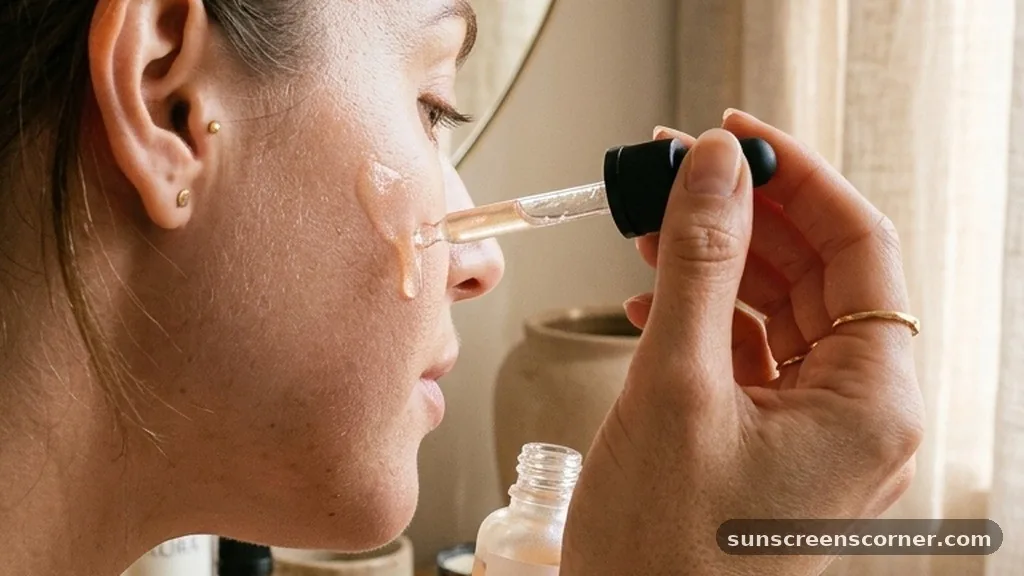
The most reliable way to remember the sequence of your skincare routine is to follow the rule of thinnest to thickest. Serums are designed to be lightweight, fast-absorbing liquids that deliver potent actives deep into the epidermis. If you were to slather a heavy cream on first, your skin would essentially be blocked by an oil-based barrier, preventing the water-based serum from doing its job.
Think of your skin like a sponge. If you coat it in wax, water just beads off.
If you start with a thin liquid, it soaks right in, and then you can use a cream to seal that moisture in. This is why you should always reach for your serum immediately after cleansing and toning your face.
Why Serum Consistency Matters
When you look at the molecular structure of different skincare items, you will notice that the serum is engineered to penetrate the skin barrier quickly. These formulations are usually water-based or gel-like, allowing them to bypass the surface layers of the skin to reach the targeted concerns, whether that is hyperpigmentation, fine lines, or dehydration.
Once you have massaged the serum into your skin, give it about a minute or two to “set.” You don’t need to wait until your face is bone dry, but letting it settle ensures that when you follow up with a moisturizer, you aren’t just pushing the serum around your face or diluting it.
Morning Versus Evening Application
Determining whether to use a serum in the morning or at night often depends on the specific ingredients involved. Most dermatologists suggest a simple split to keep things manageable and effective.
Daytime Skincare Strategies
In the morning, your primary goal is protection. You want to shield your face from environmental stressors like pollution and UV rays. This is the perfect time to use a vitamin C serum. It acts as an antioxidant powerhouse. After you pat it in, you should always follow up with a moisturizer and, most importantly, a high-SPF sunscreen. Never skip the sunscreen if you are using active ingredients, as they can sometimes make your skin more sensitive to the sun.
Nighttime Repair Protocols
At night, your skin shifts into “repair mode.” This is when you should bring out the heavy hitters like retinol, peptides, or exfoliating acids. Because these ingredients work to speed up cell turnover, they are best used when you aren’t worrying about sun exposure. Applying these before bed allows them to work uninterrupted while you sleep. Again, follow this with a thicker, more occlusive moisturizer to lock in hydration and prevent trans-epidermal water loss.
Common Mistakes When Applying Serums
Even if you know the order, it is easy to trip up on the execution. One common mistake is using too much product.
Because serums are highly concentrated, a few drops are usually enough to cover your entire face and neck. Using a dropper-full might feel like you are doing more, but you are likely just wasting expensive product that will end up pilling under your makeup.
Another frequent error is applying serum to bone-dry skin. While some formulas work fine on dry skin, many humectants—like hyaluronic acid—actually work better if your skin is slightly damp.
Try applying your serum right after you pat your face with a towel, but while it still feels a little bit hydrated. This helps the humectants pull even more moisture into your skin cells.
| Product Type | Typical Consistency | Primary Purpose |
|---|---|---|
| Cleanser | Gel/Cream/Oil | Remove debris |
| Serum | Lightweight/Watery | Targeted treatment |
| Moisturizer | Cream/Lotion | Hydration/Sealant |
| Sunscreen | Cream/Fluid | UV protection |
Addressing Topical Gaps: The 4-2-4 Rule and Layering
You might have heard of the “4-2-4” rule, which is a popular cleansing method involving four minutes of oil cleansing, two minutes of foam cleansing, and four minutes of rinsing. While this is great for deep cleaning, it doesn’t change the fundamental rules of serum application. Regardless of how long you spend cleaning your face, the serum must always come after the cleansing phase and before the moisturizing phase.
Some people also wonder if they really need both a serum and a moisturizer. The answer is usually yes. A serum is like a specialized supplement—it gives your skin specific nutrients.
A moisturizer is like your daily meal—it provides the lipids and emollients needed to keep your skin barrier intact. You wouldn’t skip your meal just because you took a vitamin, right?
Maximizing Absorption for Better Results
To get the most out of your products, consider the temperature of your skin. Warm, clean skin is generally more receptive.
If you have the time, gently pressing your palms against your face after applying the serum can help the product sink in better. This is a small, simple habit that makes a noticeable difference in how your skin feels throughout the day.
Avoid rubbing your face aggressively. Instead, use a “press and pat” motion. This is gentler on your skin and helps to distribute the product evenly without dragging the delicate skin around your eyes or mouth, which can lead to premature sagging over many years.
FAQ Section
Do you put skin serum on before or after moisturizer?
You should always apply your serum before your moisturizer, as serums are lighter and need direct contact.
When should I use a face serum?
Use your serum immediately after cleansing and toning, while your skin is still slightly damp for absorption.
Do you really need serum and moisturizer?
Yes, they serve different purposes; serums treat specific concerns, while moisturizers hydrate and protect your skin barrier.
Can I apply serum after moisturizer and sunscreen?
No, applying serum over moisturizer prevents it from penetrating effectively; always layer from thinnest to thickest consistency.
How often to use face serum?
Most serums can be used once or twice daily, but follow specific product instructions for potent active ingredients.
How do I apply serum at night?
Cleanse your face, apply your treatment serum, let it absorb briefly, and finish with a rich night moisturizer.
Does the 4-2-4 rule change serum usage?
No, the 4-2-4 rule is a cleansing technique and does not alter the order of serum application steps.