Achieving a radiant complexion often feels like solving a complex puzzle, especially when you are trying to figure out exactly when to apply specific treatments. If you have been looking to brighten your dull complexion or fade those pesky dark spots, you have probably heard that a vitamin serum is basically a non-negotiable step in any effective skincare regimen. But with so many products lining the shelves, it is easy to get confused about whether you should be using these potent formulas during the day or if they are better suited for your night routine.
Understanding the Role of Vitamin C in Your Daily Regimen
At its core, this ingredient is a powerhouse antioxidant. It works by neutralizing free radicals—those unstable molecules that damage your cells—before they can cause visible signs of aging like fine lines or hyperpigmentation.
When you use vitamin C topically, you are essentially providing your skin with a shield against environmental stressors such as UV radiation and pollution. This is why most dermatologists agree that the morning is the ideal time to incorporate it into your routine.
Why Morning Application Wins
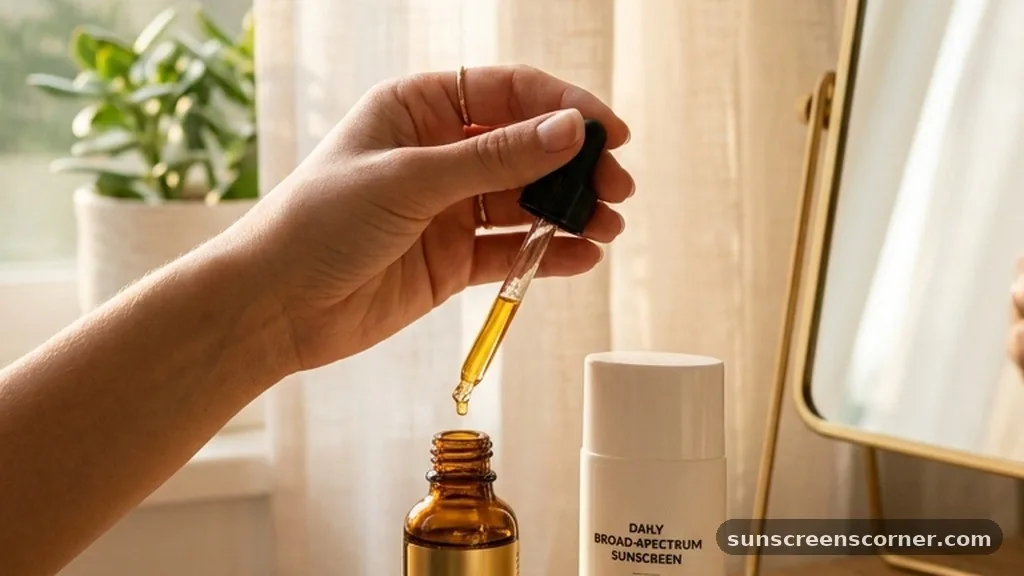
The primary benefits of this nutrient are best utilized when your skin is most exposed to external aggressors. By applying it in the morning, you provide an extra layer of defense that complements your sunscreen. Think of it as a tag-team effort; while your SPF blocks UV rays, your serum works internally to stop the oxidative stress that might slip through. It is not a replacement for sun protection, though, so please don’t skip the SPF just because you used a serum.
The Science of Stability and Penetration
Not all formulas are created equal. The most common form, L-ascorbic acid, is highly effective but can be notoriously unstable when exposed to light or air. This is why you will often see these products packaged in dark, opaque glass bottles. When you are shopping, look for serums that also contain ferulic acid or vitamin E, as these ingredients act as stabilizers and actually boost the efficacy of the main active.
Integrating Serums into Your Existing Skincare Steps
Layering products correctly is the secret sauce to seeing real results. If you apply a heavy cream before your serum, the active ingredients won’t be able to penetrate the skin barrier effectively. The general rule of thumb is to go from the thinnest consistency to the thickest.
The Correct Order of Operations
1. Cleanse: Start with a clean slate to remove dirt and oil. 2. Tone: If you use a toner, let it dry down slightly. 3. Serum: Apply your treatment while the skin is still slightly damp. 4. Moisturize: Lock everything in with a hydrating cream. 5. Protect: Always finish with sunscreen if it is the day time.
Wait Times and Absorption
A lot of people ask if they need to wait a specific amount of time between steps. While you don’t need to stand around for twenty minutes, giving your serum about one to two minutes to sink in before moving on to your moisturizer will prevent pilling and ensure better absorption. If you are rushing, just give it a quick pat with your fingertips to help it settle.
Can You Use Vitamin C at Night?
While the morning is the gold standard, there is nothing inherently wrong with using it at night. In fact, some people find that their skin is too sensitive to handle it alongside other morning products. If you prefer a nighttime application, just be mindful of what else is in your routine.
Avoiding Ingredient Conflicts
You have to be careful when mixing strong actives. For example, using a high-concentration acid like a retinol or an AHA/BHA exfoliator at the same time can lead to irritation. If you really want to use these together, it is usually better to split them up—use the vitamin C in the morning and save your retinol for the evening. This keeps your moisture barrier intact and prevents that dreaded redness or peeling.
Common Mistakes to Avoid
Even with the best intentions, it is easy to make simple errors that render your expensive products useless. One major mistake is keeping your serum in a bright, humid bathroom.
Remember, light and heat are the enemies of potency. Keep your bottle in a cool, dark drawer or even the fridge to extend its shelf life.
Identifying Oxidation
If your serum turns a dark orange or brown color, it has likely oxidized. Once it reaches this stage, it has lost its antioxidant power and might even cause irritation. A fresh serum should be clear or a very pale yellow. If it looks like iced tea, it is time to toss it and get a new one.
Addressing Topical Gaps: What You Might Be Missing
There is a lot of misinformation floating around about “tingling.” Many users assume that if a product stings, it is “working.”
This is a total myth. While a very slight, brief tingle can be normal for some, significant burning or itching is a sign that your skin barrier is compromised or the pH of the product is too low for your specific skin type.
The Sensitivity Factor
If you have sensitive skin, you don’t necessarily have to avoid these products. Instead, look for derivatives like magnesium ascorbyl phosphate. These are much gentler and less likely to cause the stinging sensation associated with pure L-ascorbic acid. You can also start by using it every other day to build up your tolerance.
Layering with Niacinamide
There used to be a long-standing rule that you shouldn’t mix vitamin C with niacinamide. Modern chemistry has largely debunked this, as most modern formulations are stable enough to be used together. However, if you are prone to flushing, it is still a good idea to space them out by a few minutes just to be safe.
Maximizing Your Investment
Since these products are often on the pricier side, you want to make sure you are getting the most out of every drop. Consistency is far more important than intensity. You will see better results from using a lower-concentration formula every single day than using a super-strong one once a week.
Consistency is Key
Skin cell turnover takes about 28 days, so don’t expect a miracle overnight. You should commit to using your product for at least three months to see a visible change in brightness and texture. Take a photo before you start so you can actually track your progress, because it is hard to notice subtle changes when you look in the mirror every day.
The Role of Diet and Hydration
Skincare is only one part of the equation. No amount of serum can compensate for a diet lacking in essential nutrients or a body that is chronically dehydrated. Drinking enough water and eating fruits and vegetables rich in antioxidants will support your skin from the inside out, making your topical treatments work even better.
Common Questions About Vitamin C
Is it safe to use vitamin C serum every single day?
Yes, using it daily is generally recommended to maintain high levels of antioxidant protection throughout the day.
Should I store my vitamin C serum in the refrigerator?
Storing it in a cool, dark place is ideal, and the fridge can help prevent premature formula oxidation.
Can I use vitamin C with retinol in the same routine?
It is usually best to use vitamin C in the morning and retinol at night to avoid irritation.
Will vitamin C serum make my skin more sensitive to the sun?
No, it actually helps protect your skin from UV damage, but you must still wear daily sunscreen.
Does the concentration percentage matter for my skin?
Higher percentages (15-20%) are potent but potentially irritating; beginners should start with 5-10% to test tolerance.
What should I do if my serum turns brown?
If the color has shifted to a dark orange or brown, the product has oxidized and is ineffective.
Can I apply moisturizer immediately after my serum?
Yes, but waiting about sixty seconds for the serum to absorb will help prevent any potential product pilling.